 Money Back Guarantee
 Easy Returns
 Secure Ordering
 2-Day Shipping
 Third Party Tested
 Batch & Lot Tracking
Lab Results
RESEARCH USE ONLY
Products are NOT intended for human consumption, clinical use, or veterinary applications. We are not affiliated with any pharmaceutical companies or their commercial medications. By placing an order, you certify these materials will be used exclusively for in vitro testing and laboratory experimentation only. Bodily introduction of any kind into humans or animals is strictly forbidden by law. This product should only be handled by licensed, qualified professionals. This product is not a drug, food, or cosmetic and may not be misbranded, misused or mislabeled as a drug, food or cosmetic.
About Tirzepatide
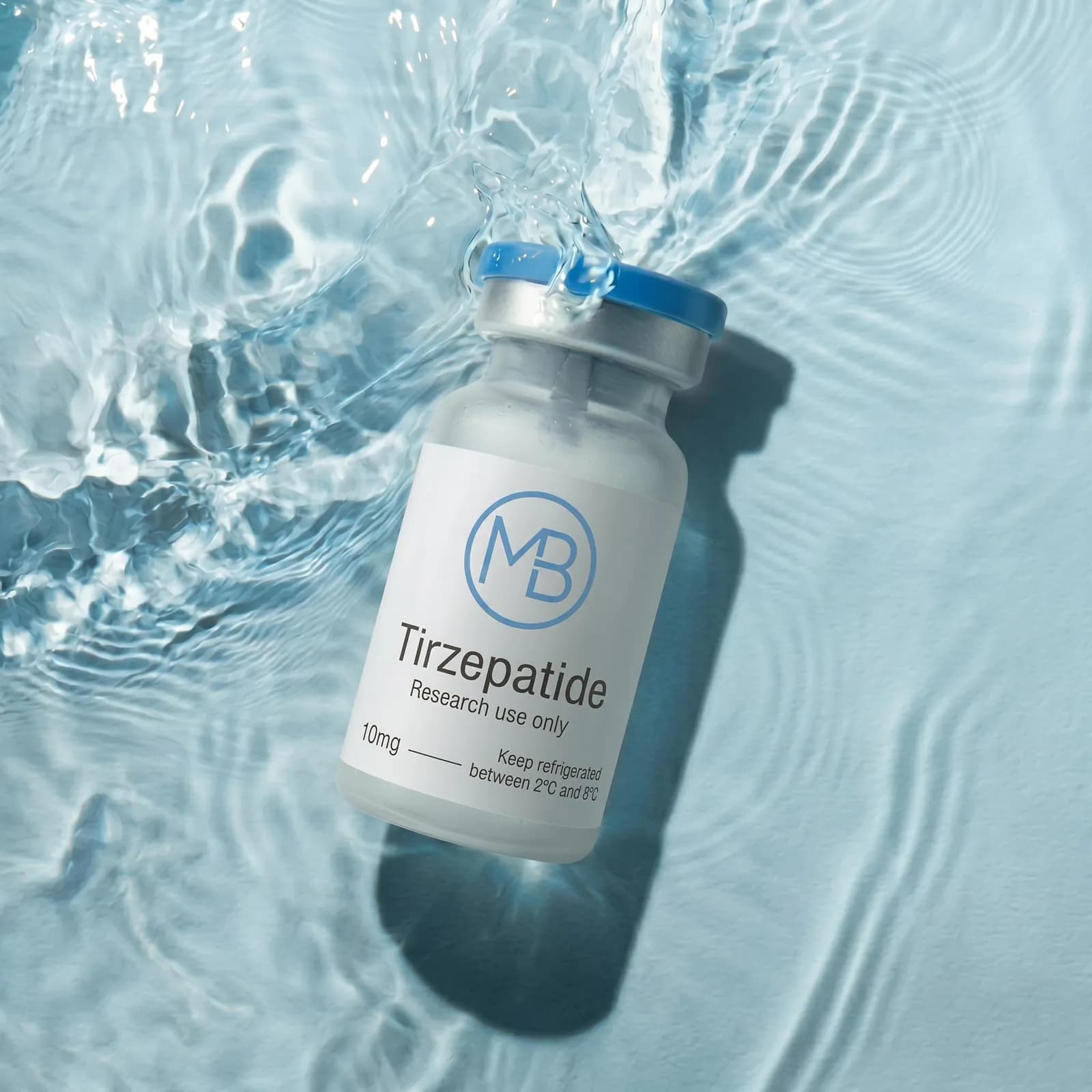
Tirzepatide is a dual-agonist peptide built to activate the GLP-1 and GIP receptors at the same time. For laboratories evaluating it, that two-receptor design sits between the single-receptor GLP-1 analogs and the tri-receptor peptides, giving a signaling profile neither class reproduces on its own. Modern Bio supplies tirzepatide as a research-use-only material, synthesized for in-vitro and animal-model work and backed by third-party verified purity, so the data you gather rests on consistent, documented quality.
Product specifications
Tirzepatide ships as a lyophilized powder sealed in a glass vial. The core identifiers and handling data are listed below.
| Property | Detail |
|---|---|
| Application | Dual-agonist incretin pathway research |
| Appearance | Solid, white powder in a glass vial |
| Chemical formula | C225H348N48O68 |
| PubChem CID | 156588324 |
| CAS number | 2023788-19-2 |
| Molecular weight | ~4,813.45 g/mol |
| Synonyms | Tirzepatide, LY3298176, GIP/GLP-1 dual agonist, dual incretin agonist, "Tirz" |
| Storage | Sealed at −20°C, away from heat, light, and moisture |
What is tirzepatide?
Tirzepatide (LY3298176) is a synthetic peptide engineered to interact with two receptor systems: the glucose-dependent insulinotropic polypeptide receptor (GIPR) and the glucagon-like peptide-1 receptor (GLP-1R). Because it is designed to engage both at once, the scientific literature classifies it as a dual-receptor agonist built on the native GIP peptide backbone. [2]
In the lab, tirzepatide gives researchers a way to study coordinated incretin receptor signaling, receptor pharmacology, and the downstream intracellular pathways that follow receptor engagement. Its two-receptor design sets it apart from single-receptor GLP-1 analogs and lets investigators examine how the GLP-1 and GIP pathways interact inside controlled experimental models.
Current understanding of tirzepatide comes from in-vitro studies, animal models, and clinical research. Findings should be read within their own experimental settings and not treated as established clinical outcomes.
Modern Bio supplies tirzepatide as a high-purity, lyophilized research compound in a single 10 mg vial. The material is intended strictly for laboratory research and is not approved for human or veterinary use.
Tirzepatide mechanism of action (research only)
Tirzepatide is studied for its ability to engage two receptor systems central to incretin signaling: GLP-1R and GIPR. Where single-receptor analogs address only the GLP-1 pathway, tirzepatide gives researchers a model for probing coordinated signaling across both incretin receptors at once, and it stops short of the glucagon arm that tri-receptor peptides add.
The mechanistic picture here is drawn from biochemical assays, cell-culture work, animal models, and clinical research. Everything below reflects observations from experimental systems and belongs strictly in a research context.
Structural and chemical basis
Tirzepatide is a synthetic peptide of 39 amino acids carrying a C20 fatty diacid modification that promotes reversible albumin binding. In experimental systems, that structural feature tracks with prolonged molecular stability and sustained receptor engagement, which makes the compound useful for studies of time-dependent receptor signaling and pharmacological behavior.
GLP-1 receptor signaling
A large share of tirzepatide research centers on GLP-1 receptor signaling. Experimental models use this pathway to trace the intracellular events that follow receptor engagement, including second-messenger systems and receptor-mediated cellular communication. [3] Inside the dual-receptor framework, GLP-1R activity is examined alongside GIPR so that investigators can characterize coordinated pharmacology rather than one pathway in isolation.
GIP receptor signaling
Tirzepatide is also studied for its interaction with the glucose-dependent insulinotropic polypeptide receptor, and its structure is imbalanced toward GIPR affinity relative to GLP-1R. Researchers use experimental models to look at how GIPR activation feeds receptor cross-talk, shapes intracellular signaling dynamics, and contributes to the combined response when both incretin receptor systems fire together. [4] The focus in this work is receptor biology and signaling mechanism, not physiological outcome.
Integrated dual-receptor signaling
Because tirzepatide engages two receptor systems within one experimental model, it is often used to study receptor coordination, pathway interaction, and signal integration across the incretin network. Researchers lean on these systems to characterize receptor cross-talk, downstream signaling behavior, and the timing of dual-receptor activation under controlled conditions. [5] Rather than standing for one mechanism, tirzepatide works as a research tool for asking how two receptor-mediated pathways interact inside a complex biological system, a step below the three-pathway model that retatrutide provides.
Modern Bio supplies tirzepatide strictly for laboratory research. The material is meant only for investigating GLP-1 and GIP receptor biology and is not approved for clinical, diagnostic, therapeutic, human, or veterinary use.
Tirzepatide research applications (observations from studies)
Tirzepatide turns up across preclinical research, translational studies, and clinical investigation as a dual-receptor peptide for exploring incretin receptor biology. Its simultaneous engagement of GLP-1R and GIPR gives researchers a model for coordinated receptor signaling that no single-receptor analog can supply.
The observations below come from biochemical studies, cell-based assays, animal models, and clinical work. Read them within their own research settings; none of them stand in for established clinical outcomes.
Dual-receptor signaling research
The headline use for tirzepatide is investigating coordinated signaling across the GLP-1 and GIP receptor systems. Experimental models let researchers examine receptor cross-talk, signal integration, and the downstream intracellular response when both incretin receptors are engaged at once, which in turn sharpens the picture of how these paired pathways behave in a controlled setting.
Receptor pharmacology and comparative studies
Tirzepatide frequently anchors comparative research across single-, dual-, and tri-receptor peptide designs. These studies weigh differences in binding characteristics, signaling duration, pathway interaction, and pharmacological behavior between the classes, supporting mechanistic work on receptor selectivity without asserting superiority or clinical performance. [5]
Endocrine and metabolic signaling models
Researchers also use tirzepatide to probe endocrine networks that run through incretin receptor pathways. Experimental systems look at how coordinated receptor activation moves through intracellular cascades and the wider regulatory networks tied to peptide-hormone biology, with the aim of better understanding receptor-mediated communication rather than establishing physiological effect.
Translational research applications
Because tirzepatide folds two receptor activities into one peptide, it serves translational research that connects mechanistic bench findings to broader questions in peptide pharmacology and receptor biology. Ongoing research continues to characterize its pharmacological properties and to inform the next round of multi-receptor peptide design.
Modern Bio supplies tirzepatide strictly for laboratory research. The material is meant only for investigating peptide receptor biology and dual-receptor signaling and is not approved for clinical, therapeutic, diagnostic, human, or veterinary use.
Tirzepatide vs. semaglutide vs. retatrutide
Researchers often line tirzepatide up against semaglutide and retatrutide because all three are peptide analogs that engage incretin-related receptor systems. What separates them is how many receptor pathways each one is built to study, which is what makes each useful for a different corner of receptor pharmacology and signaling research.
| Parameter | Retatrutide | Semaglutide | Tirzepatide |
|---|---|---|---|
| Molecular classification | Synthetic tri-receptor peptide | Synthetic GLP-1 receptor agonist | Synthetic dual GIP/GLP-1 receptor agonist |
| Primary receptor targets | GLP-1R, GIPR, and GCGR | GLP-1R | GLP-1R and GIPR |
| Primary research focus | Multi-receptor signaling, receptor cross-talk, and pathway-interaction studies | GLP-1 receptor pharmacology and signaling | Dual incretin receptor signaling and pathway-interaction studies |
| Mechanistic complexity | Tri-receptor signaling model | Single-receptor signaling model | Dual-receptor signaling model |
| Typical research models | Cell culture, biochemical assays, animal models, ongoing clinical research | Cell culture, biochemical assays, animal models, clinical research | Cell culture, biochemical assays, animal models, clinical research |
| Intended research role | Coordinated multi-receptor signaling | GLP-1 receptor biology | Dual incretin receptor biology |
| Regulatory status | Research compound under clinical investigation | Approved medicine in multiple jurisdictions | Approved medicine in multiple jurisdictions |
Tirzepatide laboratory safety & handling (research use only)
Tirzepatide arrives as a synthetic, lyophilized research peptide meant only for laboratory investigation. It should be handled by qualified personnel in controlled research settings, in line with institutional policy, laboratory safety procedure, and applicable regulation.
Because it is a research material, laboratories should adopt handling practices that protect material integrity, traceability, and reproducibility. The exact procedures will vary with study design, analytical method, and institutional risk assessment.
Laboratory handling guidelines
Best-practice guidance covers:
- Follow institutional standard operating procedures, chemical hygiene plans, and approved research protocols.
- Wear appropriate personal protective equipment, including a lab coat, gloves, and eye protection.
- Handle the material using procedures suited to research-grade peptide compounds in controlled laboratory environments.
- Use engineering controls where institutional safety policy or a risk assessment calls for them.
- Keep clean working conditions to limit contamination risk and support experimental consistency.
- Record lot numbers, storage conditions, and handling activity as part of routine quality control.
- Retain Certificates of Analysis, batch documentation, and quality records to support traceability, audit readiness, and reproducibility.
- Follow institutional procedures for spill response, waste management, and incident reporting.
Storage and stability considerations
Sound storage practice preserves product quality and reduces experimental variability.
- Store the material under the conditions given in the product documentation.
- Protect it from excess heat, moisture, and direct light.
- Keep storage conditions consistent for the length of the study.
- Track inventory and storage records as part of laboratory quality assurance.
Consistent handling, documentation, and storage all help produce reliable results and hold reproducibility steady across research programs.
Modern Bio supplies tirzepatide strictly for laboratory research. The material is not approved for clinical, therapeutic, diagnostic, human, or veterinary use and should be handled only in qualified laboratory settings.
Certificate of analysis (COA) & quality assurance
Every tirzepatide batch ships with a third-party verified Certificate of Analysis, so quality control stays transparent and research-grade. The COA reports:
- Purity assessment (HPLC or reverse-phase chromatography)
- Mass-spectrometry identity confirmation
- Lot number, testing date, and method documentation
Researchers can request a sample COA (PDF) before purchase to confirm testing parameters, analytical methods, and batch consistency, and we encourage independent testing and verification of every lot.
Frequently asked questions
- Where can I buy tirzepatide online?
- Researchers can order tirzepatide directly from Modern Bio, a US supplier of high-purity research compounds produced under strict manufacturing standards and independently verified to support reliable, reproducible research.
- What is tirzepatide used for in laboratory research?
- Tirzepatide is studied as a synthetic dual-receptor peptide for investigating GLP-1 and GIP receptor signaling in controlled laboratory models. Researchers use it to examine receptor pharmacology, pathway interaction, and dual-receptor signaling. Modern Bio supplies it exclusively for research use.
- How is tirzepatide different from semaglutide and retatrutide?
- The main difference is receptor scope. Semaglutide engages the GLP-1 receptor, tirzepatide targets both GLP-1 and GIP receptors, and retatrutide is engineered to interact with GLP-1, GIP, and glucagon receptor pathways. Those differences suit each compound to a different area of receptor signaling and pharmacology research.
- Is tirzepatide approved for human use?
- Modern Bio supplies tirzepatide in lyophilized peptide form strictly as a laboratory research compound, not for human or veterinary use. Approved pharmaceutical formulations of tirzepatide exist as regulated medicines, but the research-grade material sold here is not intended for therapeutic use.
- Does Modern Bio supply high-purity tirzepatide?
- Yes. Modern Bio supplies high-purity, research-grade tirzepatide made for laboratory research. Every batch undergoes independent third-party testing, and Certificates of Analysis are available to support quality assurance and reproducible research.
- Does Modern Bio provide Certificates of Analysis for tirzepatide?
- Yes. A Certificate of Analysis is available for every batch so researchers can verify identity, purity, and batch consistency before use. COAs are produced after analytical testing by independent third-party laboratories, and you can usually trace each certificate back to the testing facility.
- Why do researchers study dual-receptor peptides like tirzepatide?
- Dual-receptor peptides let researchers investigate coordinated signaling across two receptor systems within one experimental model. That supports comparative study of receptor interaction, signaling dynamics, and incretin pharmacology under controlled laboratory conditions.
References
- Zheng Z, Zong Y, Ma Y, et al. Glucagon-like peptide-1 receptor: mechanisms and advances in therapy. Sig Transduct Target Ther. 2024;9:234.
- Coskun T, Sloop KW, Loghin C, et al. LY3298176, a novel dual GIP and GLP-1 receptor agonist for the treatment of type 2 diabetes mellitus: From discovery to clinical proof of concept. Mol Metab. 2018;18:3-14.
- Meloni AR, DeYoung MB, Lowe C, Parkes DG. GLP-1 receptor activated insulin secretion from pancreatic β-cells: mechanism and glucose dependence. Diabetes Obes Metab. 2013;15(1):15-27.
- James-Okoro P-P, Lewis JE, Gribble FM, Reimann F. The role of GIPR in food intake control. Front Endocrinol. 2025;16:1532076.
- Jastreboff AM, Aronne LJ, Ahmad NN, et al. Tirzepatide once weekly for the treatment of obesity (SURMOUNT-1). N Engl J Med. 2022;387(3):205-216.
For research use only. Not for human or veterinary use, diagnosis, or treatment. Not a drug, food, or cosmetic. Sold only to qualified research professionals aged 21 or older.
- ~21% weight loss
- FDA-approved since 2023